For much of our reproductive lives, the message is clear: do not get pregnant until you are ready.
We learn about contraception. We are warned about sexually transmitted infections. We are encouraged to finish our education, establish our careers, find the right partner and become financially secure before considering parenthood.
All of that information matters.
But there is another side of reproductive education that is too often missing: how fertility changes, how to recognize potential problems and how to prepare for a healthy pregnancy before the positive test.
After more than 35 years as an OBGYN, I have met many patients who did everything they believed they were supposed to do. They carefully prevented pregnancy for years. Then, when the time finally felt right, they stopped contraception and assumed pregnancy would follow quickly.
Sometimes it did.
Sometimes it did not.
Contraceptive education is not fertility education
Knowing how to prevent pregnancy does not necessarily mean understanding fertility.
Many people reach their thirties without having been taught:
- How fertility changes with age
- What a typical menstrual cycle can—and cannot—tell us
- That persistently irregular cycles deserve investigation
- That severe period pain should not simply be accepted as normal
- That conditions such as PCOS and endometriosis may affect both fertility and long-term health
- That male factors can contribute to difficulty conceiving
- That certain medications, medical conditions and environmental exposures can affect reproductive health
- That preparing for pregnancy ideally begins before conception
This is not a criticism of contraception. Access to reliable contraception gives people essential control over whether and when they become parents.
The problem is that our education frequently stops there.
We teach pregnancy prevention without providing enough information about fertility preservation, reproductive aging or preconception health. Then we expect people to make some of the most important decisions of their lives without a complete picture.
Falling birth rates and infertility are not the same thing
Birth rates are declining in Canada and in many other parts of the world. But a country’s birth rate is not a direct measure of its population’s biological fertility.
People may have fewer children because of housing costs, delayed partnerships, career demands, inadequate childcare, economic uncertainty or simply personal choice. These social and economic realities matter.
At the same time, infertility is common. The World Health Organization estimates that approximately one in six people of reproductive age experiences infertility during their lifetime.[1]
These are related conversations, but they are not identical.
The answer to declining birth rates is not to pressure people to have children. Nor should fertility education be used to frighten young adults into becoming parents before they are ready.
The answer is to give people better information, earlier—so that their decisions are genuinely informed.
What should we be teaching?
1. Fertility changes over time
Age is not the only factor that affects fertility, but it is an important one.
Female fertility gradually declines with age, with a more pronounced decline in the mid-to-late thirties. Male fertility also changes with age, although generally more gradually.
This does not mean that everyone should have a baby at 25. It means people deserve realistic information while they still have the widest range of choices.
Someone who hopes to have several children may make different decisions from someone who is unsure about parenthood or wants only one child. A person considering egg or sperm freezing needs enough time to explore the benefits, limitations and costs. Someone facing chemotherapy, ovarian surgery or another fertility-threatening treatment may need an urgent fertility-preservation discussion.
Earlier information does not dictate a decision. It creates options.
2. Symptoms are information
Menstrual cycles can provide important clues about reproductive and overall health.
Very irregular or absent periods may be associated with ovulatory problems, PCOS, thyroid disorders, significant energy deficiency or other hormonal conditions.
Severe menstrual pain, painful intercourse, heavy bleeding or persistent pelvic pain can be associated with conditions such as endometriosis, adenomyosis or fibroids.
These symptoms do not automatically mean that someone will experience infertility. But they do deserve to be taken seriously, particularly when they interfere with school, work, exercise, sleep or daily life.
No one should have to wait until they are trying to conceive before their symptoms are investigated.
3. Fertility is not solely a female responsibility
One of the most persistent problems in fertility care is the assumption that preparation is mainly the woman’s responsibility.
It is not.
Male reproductive health is influenced by medical conditions, medications, smoking, excessive alcohol, anabolic steroids, heat exposure, environmental toxins, nutrition, sleep and metabolic health. The WHO notes that male infertility can involve sperm number, movement, shape, ejaculation, hormonal problems or obstruction of the reproductive tract.[1]
When a couple is preparing for pregnancy, both partners should be part of the conversation from the beginning.
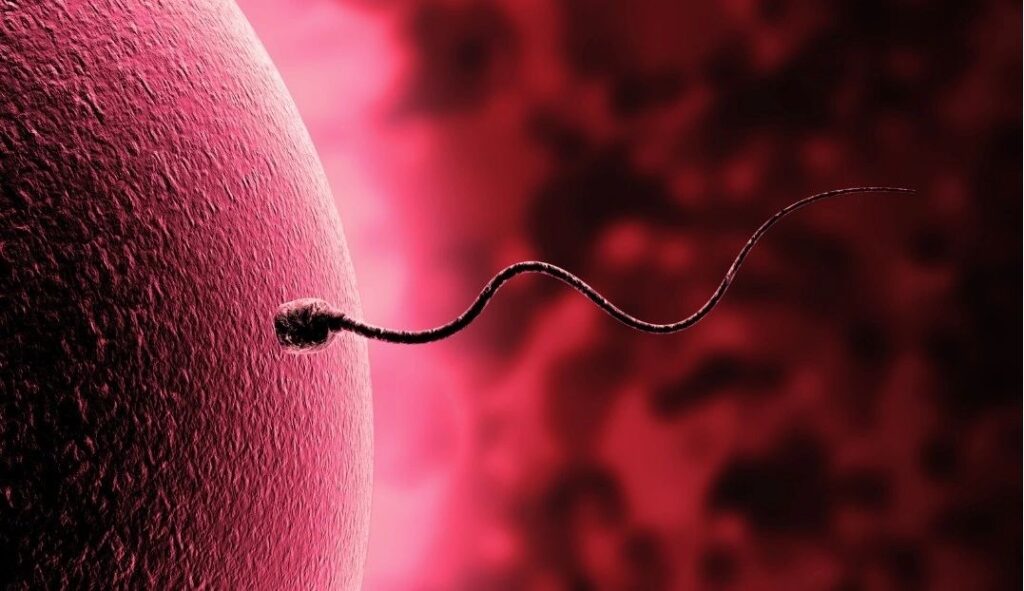
The egg contributes half of the genetic material. The sperm contributes the other half.
4. Preconception health matters before pregnancy begins
Some of the earliest and most important stages of fetal development occur before many people realize they are pregnant.
That is why preconception care matters.
The Public Health Agency of Canada recommends that people who could become pregnant take a daily multivitamin containing 400 micrograms—or 0.4 mg—of folic acid. When pregnancy is planned, folic acid should ideally begin at least three months before conception. Some people need a different dose based on their health history and should discuss this with a healthcare professional.[2]
Preconception preparation can also include:
- Reviewing prescription medications, over-the-counter products and supplements
- Updating vaccinations when appropriate
- Optimizing diabetes, thyroid disease, hypertension and other chronic conditions
- Discussing family and genetic history
- Supporting nutritious eating, restorative sleep and regular movement
- Reducing smoking, excessive alcohol and recreational drug exposure
- Paying attention to occupational and environmental exposures
- Including dental and mental health in the plan
- Assessing both partners when there are known concerns
These steps cannot guarantee pregnancy, and they cannot prevent every complication. Fertility is influenced by biology, age, genetics, medical conditions and sometimes factors we cannot identify or change.
Preparation is not about perfection.
It is about recognizing what can reasonably be improved and obtaining help when it may be needed.
Start before you are ready—but begin where you are
I often say that the best time to learn about fertility is before you are ready to become pregnant.
That does not necessarily mean having tests or taking supplements years in advance. It means understanding your body, knowing your history, recognizing symptoms and having an informed sense of your reproductive timeline.
If you are already trying to conceive, pregnant or facing a fertility diagnosis, you have not missed your opportunity. There is still value in improving your health, asking questions and addressing modifiable factors.
The goal is not to make people feel guilty about what they did not know.
The goal is to make sure the next generation knows more.
Before the Positive Test
This is the first article in my four-week Before the Positive Test series, leading up to my presentation at the National Women’s Show in Ottawa on October 18.
Over the coming weeks, I will explore:
- Why fertility can offer important clues about overall health
- Why PCOS, endometriosis and male-factor fertility problems are often recognized too late
- What I wish every patient knew before trying to conceive
- The practical steps both partners can take before pregnancy
These are also central themes in my book, Optimize Your Fertility Naturally: A Holistic Guide to Achieving a Healthy Pregnancy.
My message is not that we can control every reproductive outcome. We cannot.
My message is that people deserve knowledge before they need it.
Win tickets to the National Women’s Show
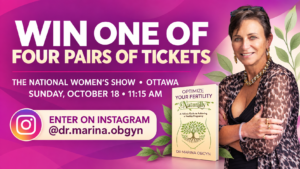
To celebrate the beginning of this series, I am giving away four pairs of tickets to the National Women’s Show in Ottawa.
To enter, visit the pinned giveaway post on my Instagram or Facebook page and answer this question:
What is one thing you wish you had learned earlier about fertility or reproductive health?
You can find me on Instagram at @dr.marina.obgyn. Please note that I will contact winners only through my official account. Complete eligibility details, deadlines and giveaway rules are included in the official giveaway post.
I would also love to hear your answer in the comments below.
What do you wish someone had taught you about fertility when you were younger?
Dr Marina OBGYN
References
- World Health Organization. “Infertility.” Updated November 28, 2025. https://www.who.int/news-room/fact-sheets/detail/infertility.
- Public Health Agency of Canada. “Folic Acid, Healthy Pregnancy and Neural Tube Defect Prevention.” Updated October 20, 2025. https://www.canada.ca/en/public-health/services/pregnancy/folic-acid.html.
This article provides general educational information and is not a substitute for individualized medical care. Speak with your healthcare professional about your personal health, medications, supplements and reproductive plans.