When a patient tells me that her periods have always been irregular, extremely painful or unusually heavy, I do not think only about whether she will be able to become pregnant.
I also wonder what those symptoms may be telling us about her overall health.
The reproductive system does not operate independently from the rest of the body. It is connected to metabolism, thyroid function, insulin sensitivity, inflammation, nutrition, sleep, stress, medications, and environmental exposures.
Fertility is not a perfect measure of health. Someone can be very healthy and still experience infertility, while another person may conceive easily despite having an undiagnosed medical condition.
But reproductive symptoms can provide valuable clues.
That is why I often describe fertility as a window into health.
Your menstrual cycle is more than a monthly event
The menstrual cycle has sometimes been described as an additional vital sign because changes in cycle regularity, duration and bleeding can reveal information about overall health.[1]
A cycle does not need to occur every 28 days to be normal. Some variation is expected, and cycles can change with age, stress, travel, illness and other circumstances.
However, certain patterns deserve attention:
- Periods that are persistently very irregular
- Periods that disappear for several months when pregnancy is not the reason
- Bleeding that is unusually heavy or prolonged
- Severe menstrual pain that interferes with work, school, exercise or sleep
- Bleeding between periods
- A significant change from your usual pattern
- New pelvic pain or pain during intercourse
These symptoms do not automatically mean that something is seriously wrong. Nor do they necessarily mean that a person will experience infertility.
They are signals that deserve to be heard.
Too often, patients are told that painful or irregular periods are simply part of being a woman. The symptoms may be treated temporarily without asking why they are happening.
Then, years later, when the person begins trying to conceive, an underlying condition is finally investigated.
We should not have to wait for infertility before taking reproductive symptoms seriously.
Irregular cycles can point beyond the ovaries
One possible cause of irregular or absent ovulation is polycystic ovary syndrome, or PCOS—now also increasingly discussed as polyendocrine-metabolic ovarian syndrome, or PMOS.
PMOS is not only a fertility condition.
It can be associated with insulin resistance, type 2 diabetes, abnormal cholesterol, sleep disorders, high blood pressure, and an increased risk of cardiovascular disease. The 2023 international evidence-based guideline recommends assessing individual metabolic and cardiovascular risk factors in people with PCOS.[2]
This is an important shift in perspective.
If we treat PMOS only when someone wants to become pregnant, we may miss years in which we could have addressed metabolic health, menstrual protection, emotional wellbeing, and long-term risk.
Irregular periods are not a diagnosis by themselves. They can have many causes, including thyroid disorders, elevated prolactin, perimenopause, significant changes in weight, under-fueling, intense exercise and certain medications.
But you should discuss it with a healthcare professional.
Pain is information too
Severe menstrual pain can be associated with endometriosis, a chronic condition in which tissue resembling the lining of the uterus grows outside the uterus.
Endometriosis can cause painful periods, chronic pelvic pain, pain during or after intercourse, heavy bleeding, bowel or bladder symptoms, fatigue and difficulty conceiving.[3]
Symptoms vary widely. Some people have extensive disease with relatively little pain, while others experience debilitating symptoms.
A person should not have to organize her entire life around her period.
If someone regularly misses work or school, vomits from pain, cannot sleep, cannot exercise or needs increasingly strong medication to function during menstruation, that deserves proper assessment.
Painful periods do not always mean endometriosis, and endometriosis does not always cause infertility. But dismissing significant pain can delay diagnosis, treatment and informed reproductive planning.
Fertility also reflects male health
This conversation must include men.
Sperm production is influenced by general and reproductive health. Smoking, excessive alcohol, anabolic steroids, obesity, some medications, medical treatments and exposure to certain environmental pollutants can affect male fertility.[4]
Conditions such as diabetes, hormonal disorders and varicoceles may also affect sperm production or function.
In some situations, a semen analysis can reveal a health concern that deserves attention beyond the goal of conception.
Yet fertility preparation is still frequently directed almost entirely toward women. Women are told to improve their diets, take supplements, track their cycles and reduce stress, while the male partner is barely mentioned.
That makes little biological sense.
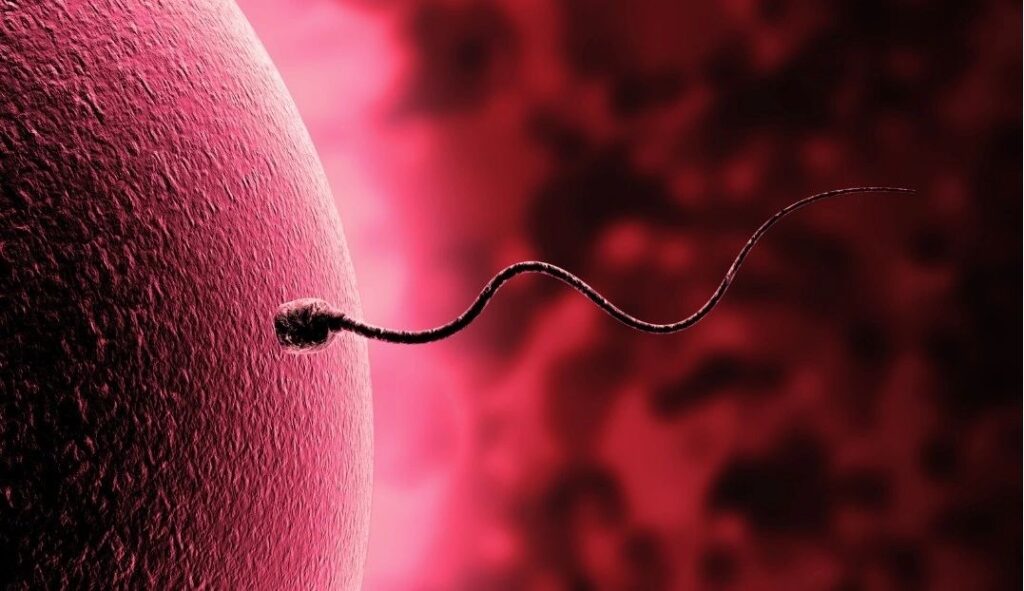
Both the egg and sperm contribute genetic material. Both partners’ health belongs in the preconception conversation.
The connection with healthy aging
Many of the foundations that support reproductive health also support long-term health:
- Eating predominantly nutrient-dense, minimally processed foods
- Moving regularly and maintaining muscle
- Getting adequate, restorative sleep
- Avoiding smoking
- Limiting excessive alcohol
- Addressing insulin resistance and metabolic disease
- Reviewing medications and supplements
- Treating chronic health conditions
- Reducing harmful environmental exposures where reasonably possible
- Supporting mental health and healthy relationships
These habits cannot guarantee fertility or pregnancy. They also cannot eliminate the effects of age, genetics, structural conditions or diseases such as endometriosis.
This is not about blaming people for infertility.
It is about recognizing that the years before pregnancy are an opportunity to improve health—not only for a future pregnancy, but for the decades that follow.
The goal is not to become “perfect” before trying to conceive. No one is perfectly healthy, and waiting for perfection can become another source of anxiety.
The goal is to recognize useful information and act on what is realistically within your control.
A simple approach: notice, ask and act
Notice
Pay attention to patterns rather than isolated events.
Track when your period begins, approximately how long it lasts, whether the timing is predictable and whether pain or bleeding interferes with daily life.
Men can also notice changes in sexual function, testicular symptoms, medication use, anabolic steroid exposure and general metabolic health.
Ask
Bring concerns to a healthcare professional before pregnancy is urgent.
Useful questions might include:
- Are my cycles regular enough to suggest consistent ovulation?
- Does my pain or bleeding require further assessment?
- Could a medication or supplement affect fertility or pregnancy?
- Should I be screened for PCOS, thyroid disease, diabetes or another condition?
- Is my family history relevant?
- Should my partner also be assessed?
- Would earlier fertility counselling help us plan realistically?
Not everyone needs extensive fertility testing before trying to conceive. Testing should be guided by age, symptoms, medical history, family goals and individual circumstances.
Act
Choose one or two achievable steps rather than attempting a complete lifestyle transformation overnight.
That could mean:
- Booking a medical or preconception appointment
- Beginning an appropriate prenatal multivitamin before pregnancy
- Improving sleep consistency
- Adding regular walking and strength training
- Reducing smoking or excessive alcohol
- Reviewing medications with a qualified clinician
- Improving food quality
- Asking that significant menstrual symptoms be properly investigated
- Including the male partner from the beginning
Small changes made consistently are usually more useful than an intense plan that cannot be sustained.
Your body is giving you information
Reproductive symptoms should not be viewed only through the narrow question, “Can I get pregnant?”
A better question is:
“What might this be telling me about my health?”
The answer may be reassuring. It may reveal something that can be treated. It may lead to earlier fertility planning. Or it may simply help someone understand her body more clearly.
Knowledge does not guarantee control over every outcome.
But knowledge creates choices—and earlier knowledge usually creates more choices.
This is the second article in my Before the Positive Test series leading up to my presentation at the National Women’s Show in Ottawa on October 18.
Next week, I will discuss the diagnoses we are making too late, including PCOS, endometriosis, and male-factor fertility concerns.
These are also central themes in my book, Optimize Your Fertility Naturally: A Holistic Guide to Achieving a Healthy Pregnancy.
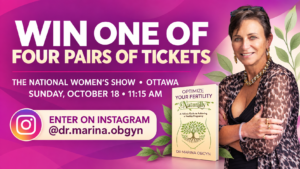
Ticket giveaway closes tonight
I am giving away four pairs of tickets to the National Women’s Show.
To enter, visit the pinned giveaway post on Instagram at @dr.marina.obgyn and answer:
What is one thing you wish you had learned earlier about fertility or reproductive health?
Entries close tonight, Sunday, September 27, at 8:00 p.m. Eastern Time. Complete rules are included in the Instagram post.
Dr Marina OBGYN
References
- American College of Obstetricians and Gynecologists. “Menstruation in Girls and Adolescents: Using the Menstrual Cycle as a Vital Sign.” ACOG Committee Opinion No. 651. December 2015. https://www.acog.org/clinical/clinical-guidance/committee-opinion/articles/2015/12/menstruation-in-girls-and-adolescents-using-the-menstrual-cycle-as-a-vital-sign.
- Teede, Helena J., et al. “Recommendations from the 2023 International Evidence-Based Guideline for the Assessment and Management of Polycystic Ovary Syndrome.” Fertility and Sterility 120, no. 4 (2023): 767–793. https://pubmed.ncbi.nlm.nih.gov/37580861/.
- World Health Organization. “Endometriosis.” Updated October 15, 2025. https://www.who.int/news-room/fact-sheets/detail/endometriosis.
- World Health Organization. “Infertility.” Updated November 28, 2025. https://www.who.int/news-room/fact-sheets/detail/infertility.