Last week, I wrote about a vision for improving preconception care in Canada — beginning the conversation about pregnancy health long before someone sees a positive pregnancy test.
The response made me think more deeply about an important question:
What do we actually have now — and how could we make it better?
Because we are not starting from nothing.
Canada has excellent obstetricians, family physicians, fertility specialists, nurses, midwives, dietitians, pharmacists and other health professionals. We have public health programs, fertility clinics, prenatal programs and increasingly sophisticated reproductive medicine.
We know far more than we did even a generation ago about the factors that can influence fertility and pregnancy.
And yet, much of that knowledge reaches people surprisingly late.
Where does preconception care happen now?
In our present system, preconception care doesn’t really have one home.
A family physician may discuss folic acid, medications, immunizations, smoking, alcohol or chronic medical conditions with someone planning pregnancy.
An obstetrician or maternal-fetal medicine specialist may provide more intensive counselling to someone with a medical condition or previous pregnancy complication.
Fertility clinics provide increasingly sophisticated assessment and treatment — but usually once someone is already having difficulty conceiving or has decided to pursue fertility preservation.
Public health agencies provide valuable information about healthy pregnancy and, to varying degrees, preparing for pregnancy.
Midwives, naturopathic doctors, dietitians, pharmacists, acupuncturists and other professionals may also provide advice about nutrition, lifestyle and reproductive health.
So the pieces exist.
What is missing is a clearly defined, accessible pathway that brings those pieces together before pregnancy.
We still tend to begin too late
For most people, pregnancy care begins when they are already pregnant.
But biologically, pregnancy does not begin with a positive pregnancy test.
The health of the egg and sperm, nutritional status, metabolic health, medication exposures, environmental exposures and lifestyle factors all precede conception.
Many of these factors are potentially modifiable.
That doesn’t mean every fertility problem or pregnancy complication can be prevented. It certainly cannot.
Nor should preconception care become another source of pressure or guilt for people trying to conceive.
Instead, it should be about opportunity.
If there are reasonable things people can do before pregnancy that may improve their health, fertility or the health of a future pregnancy, shouldn’t we make that information easier to access?
Fertility education needs to begin even earlier
There is another gap that I believe deserves much more attention.
Many young people learn a great deal about how not to become pregnant.
That education is essential.
But they often learn surprisingly little about fertility itself.
They may not understand how fertility changes with age, how male fertility contributes equally to reproduction, or how conditions such as PCOS and endometriosis can affect reproductive planning.
We could introduce age-appropriate fertility and reproductive-health education in high school without encouraging young people to have children earlier.
The purpose would be the opposite of telling people when to have children.
It would be to give them enough information to make their own informed decisions later.
Education creates choice.
Preconception care should include men
This is one of the biggest opportunities for change.
Pregnancy care has traditionally focused overwhelmingly on women. Preconception care gives us the opportunity to change that.
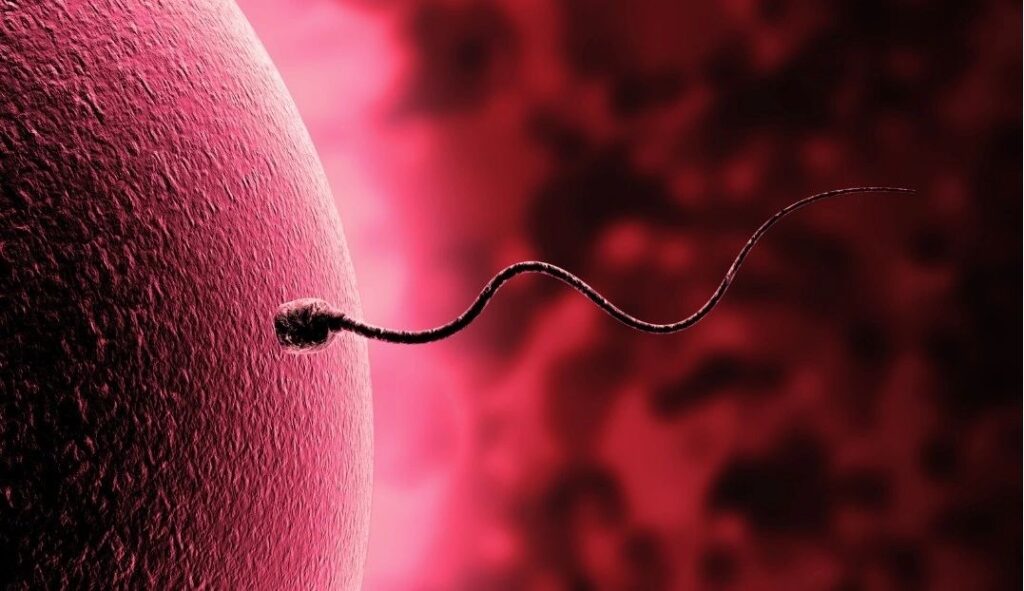
Approximately half of the genetic material of an embryo comes from the sperm.
Male reproductive health matters.
Smoking, alcohol, obesity, metabolic health, heat exposure, some medications, environmental exposures and other factors may affect sperm quantity or quality.
Yet how often do we invite men into a healthcare conversation before a couple begins trying to conceive?
A modern preconception program should be designed for both prospective parents whenever possible.
What could a better system look like?
I don’t think the answer is necessarily another complicated healthcare program.
Perhaps we begin with something much simpler.
Imagine that anyone considering pregnancy within the next few years could easily access a preconception health visit or program.
That could include assessment of:
- reproductive and family history
- menstrual and fertility history
- medications and supplements
- vaccination status
- nutrition and micronutrient needs
- metabolic health
- sleep, exercise and stress
- smoking, alcohol and substance use
- occupational and environmental exposures
- male reproductive health
- genetic or carrier screening when appropriate
- fertility preservation and reproductive timelines
Not everyone would need every test or every intervention.
The goal would not be to medicalize healthy people.
The goal would be to identify what is relevant to that individual and give them practical, evidence-informed guidance.
And it doesn’t all have to happen in a doctor’s office
This is where I think we need to become more imaginative.
Canada already has many professionals and organizations interested in healthier pregnancies and healthier families.
What if we connected them?
Physicians. Nurses. Midwives. Pharmacists. Dietitians. Naturopathic doctors. Fertility specialists. Public health professionals. Researchers. Educators. Doulas. Acupuncturists. Community organizations. Patient advocates.
Each has something different to contribute.
We need appropriate standards and evidence-based guidance, of course. But collaboration could dramatically expand access without placing the entire responsibility on already overstretched family physicians and obstetricians.
Some education could happen virtually.
Some could happen through community programs.
Some could be delivered through schools, pharmacies or public health.
And people who need medical investigation or specialist care could then be directed appropriately.
Perhaps we also need a different measure of success
We currently measure many outcomes after something has gone wrong: infertility, miscarriage, pregnancy complications, premature birth and maternal and newborn morbidity.
Those outcomes are enormously important.
But what if we also asked:
How many Canadians entered pregnancy feeling informed, prepared and as healthy as reasonably possible?
That would represent a very different philosophy of reproductive healthcare.
Instead of waiting for disease and then treating it, we would devote more attention to creating health before pregnancy begins.
Where do we start?
I don’t think one person, profession or organization should decide what Canadian preconception care ought to look like.
The first step should be listening.
What are family physicians already doing?
What are obstetricians seeing that they wish had been addressed earlier?
What do fertility specialists wish their patients had known five years before walking into their clinics?
What are midwives, nurses, dietitians, pharmacists and other healthcare professionals already doing successfully?
What do young adults actually want to know?
And perhaps most importantly:
What do people who are planning families wish someone had told them earlier?
I would like to begin bringing some of those voices together.
Not to create another silo, but to explore whether we can connect the excellent work that is already happening and identify what is missing.
My hope is that we can eventually move toward a model in which preconception health becomes a normal part of preventive healthcare — not something people discover only when they are already pregnant or struggling to conceive.
Because the months and years before pregnancy are not empty space.
They are an extraordinary window of opportunity.
And I think we can use that window much better than we do today.
I would very much like to hear what you think.
If you are a healthcare professional, educator, researcher, policymaker, parent, prospective parent — or simply someone who believes we should be talking about reproductive health earlier — what would you want a Canadian preconception health initiative to include?
What are we already doing well?
And what are we missing?
This is a conversation I hope we can build together.
Dr Marina OBGYN